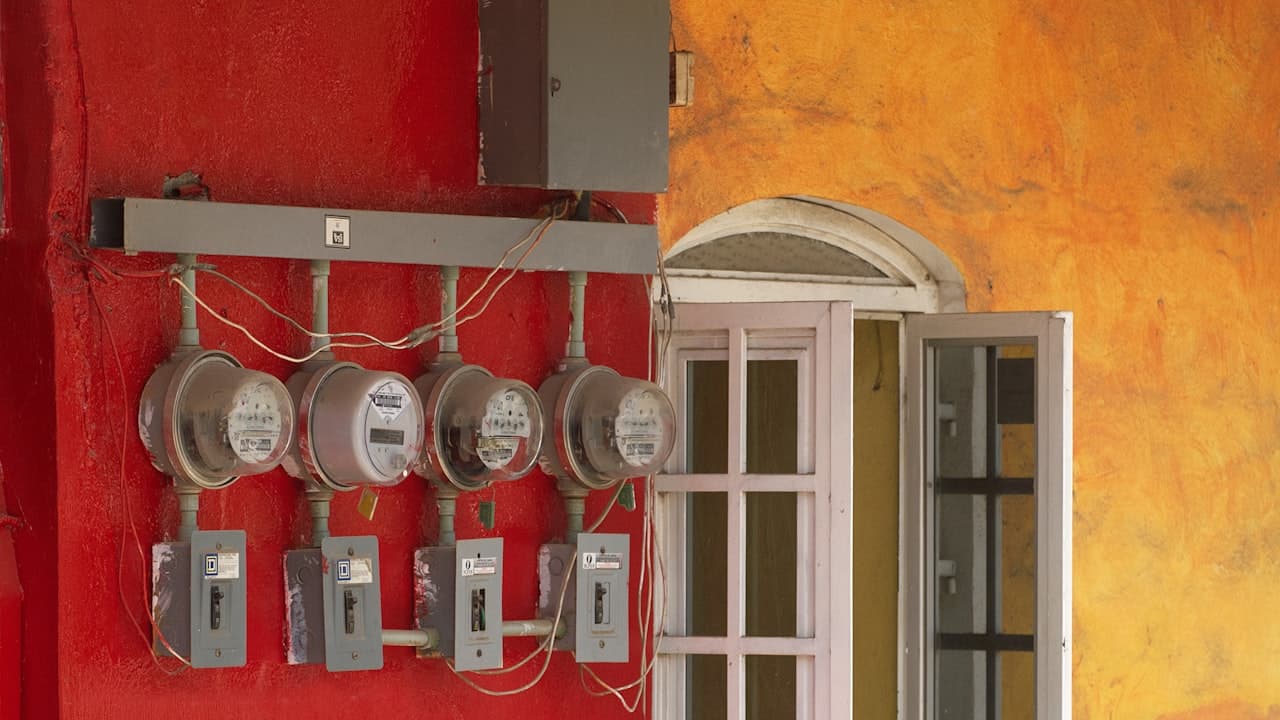
Your inverter is the brain of your solar system. It converts DC power from your panels into AC power for your home, manages battery charging, and decides when to pull from the grid. It also generates heat while doing all of this — and where you put it determines how well it copes.
Get the placement wrong and you shorten its life, reduce its efficiency, and possibly void the warranty. Get it right and it quietly does its job for 10-15 years.
Temperature Is the Enemy
This is the single most important factor. Inverters are rated to perform at 25 degrees C. For every 10 degrees above that, you lose efficiency and accelerate component ageing.
| Ambient Temperature | Impact |
|---|---|
| Below 25 C | Optimal — inverter runs at full rated capacity |
| 25-35 C | Acceptable — slight efficiency loss, normal for Zimbabwe |
| 35-45 C | Problematic — inverter may derate (reduce output to protect itself) |
| Above 45 C | Dangerous — thermal shutdown, accelerated capacitor ageing, warranty risk |
In Zimbabwe, ambient temperatures regularly hit 35 C in summer. Put your inverter in an unventilated tin-roofed garage and the air around it easily reaches 45-50 C. That is not a place for expensive electronics.
A common mistake is mounting the inverter on a wall that gets direct afternoon sun. Even with an outdoor-rated unit, the combination of solar radiation on the enclosure plus internal heat generation can push temperatures well above safe limits.
Best Locations in a Zimbabwean Home
The Garage (Most Common)
The garage is the most popular spot for good reason. It is usually accessible, has wall space, and keeps the inverter out of living areas. But not all garages are equal:
- Good: Brick garage with a ceiling, ventilated (window or vent openings), shaded from direct sun
- Bad: IBR sheet metal garage with no ceiling, no airflow, baking in full sun
If your garage has no ceiling and a metal roof, the trapped heat makes it one of the worst locations in the house. Either install a ceiling board above the inverter or consider a different room.
Indoor Utility Room or Passage
An indoor room with stable temperatures is excellent for inverter longevity. The air-conditioned environment (or at least insulated from outdoor extremes) keeps temperatures in the ideal range.
The downside is noise. Some inverters have cooling fans that are noticeable at night, especially in a passage near bedrooms. Check the noise rating before committing to an indoor location.
Outdoor Mounting
Outdoor installation works — but only with the right IP rating and some planning. Mount on a south-facing wall (shaded from direct sun in the Southern Hemisphere) under an eave or purpose-built shade structure.
The south-facing wall trick works because in Zimbabwe the sun tracks across the northern sky. A south-facing wall stays shaded for most of the day, keeping surface temperatures significantly lower than north or west-facing walls.
Ventilation and Clearances
Inverters need airflow to dissipate heat. Every manufacturer specifies minimum clearances — here are typical requirements:
| Side | Minimum Clearance |
|---|---|
| Above | 300-500 mm (heat rises — this is the most critical gap) |
| Below | 200-300 mm |
| Left and Right | 150-200 mm |
| Front | 500 mm+ (for airflow intake and maintenance access) |
Do not mount an inverter inside a closed cupboard or tight recess. The enclosed space traps heat and defeats the cooling system. If you must put it in a cupboard, install ventilation fans — one low for intake, one high for exhaust.
If you are installing multiple inverters side by side, increase the horizontal gap between them to at least 300 mm. Each unit generates heat that affects its neighbour.
IP Ratings Explained
The IP (Ingress Protection) rating tells you what an inverter is designed to withstand. Two numbers matter:
| IP Rating | Dust Protection | Water Protection | Suitable For |
|---|---|---|---|
| IP20 | Protected against fingers and objects over 12 mm | No water protection | Indoor only — utility room, garage |
| IP54 | Protected against dust ingress (limited) | Splash-proof from any direction | Sheltered outdoor — under eave or carport |
| IP65 | Dust-tight (no ingress) | Protected against water jets | Full outdoor — wall-mounted, exposed |
Most budget inverters sold in Zimbabwe (Axpert, Mecer, many rebranded units) are IP20 or IP21. These must go indoors. Do not mount an IP20 inverter on an outside wall — one rainstorm and you have a serious problem.
Higher-end inverters like Deye, Sunsynk, and Victron often come in IP65-rated enclosures suitable for outdoor mounting.
Dust and Insects
Zimbabwe's dry season brings fine dust that settles on everything, including inverter ventilation grilles. Clogged air intakes mean reduced cooling and higher operating temperatures.
Insects are the other problem. Geckos, ants, and wasps love the warm, sheltered interior of an inverter enclosure. Ant infestations in particular can cause short circuits on PCB boards.
What to do:
- Clean ventilation grilles every 3-6 months with a soft brush or compressed air
- Install mesh screens over air intake openings (fine enough to block insects, open enough to allow airflow)
- Avoid mounting near trees or dense vegetation where insects are more active
- Inspect annually — open the enclosure (when powered down) and check for nests, webs, or dust buildup
Noise Considerations
Some inverters are virtually silent. Others have cooling fans that produce a noticeable hum, especially under heavy load or when the batteries are charging at high current.
Typical noise levels:
- Fanless inverters: Near-silent (some have a faint electrical hum under load)
- Fan-cooled inverters: 35-50 dB — comparable to a quiet conversation or a fridge compressor
- High-power inverters under load: 50-60 dB — noticeable in a quiet room
If you are noise-sensitive or plan to mount near bedrooms, check the spec sheet for fan noise ratings. Alternatively, choose a location like the garage where fan noise will not bother anyone.
Cable Run Lengths
Where your inverter sits relative to your battery bank and panel array matters for cable sizing and voltage drop.
DC cables (panels to inverter and battery to inverter):
- Keep DC cable runs as short as possible — DC current at 48V is high, and longer runs mean thicker (more expensive) cables to avoid voltage drop
- The inverter should ideally be within 3-5 metres of the battery bank
- Panel-to-inverter runs are less critical if using high-voltage strings (above 100V), but still keep them reasonable
AC cables (inverter to distribution board):
- AC cable runs are more forgiving because the voltage is higher (230V) and current is lower
- Runs of 10-20 metres from inverter to DB are perfectly normal
If you have to choose between putting the inverter close to the panels or close to the batteries, choose close to the batteries. The battery-to-inverter DC connection carries the highest current and benefits most from a short cable run.
Placement Checklist
Before your installer mounts the inverter, walk through this list together:
- Temperature: Is the location shaded from direct sun? Will it stay below 40 C in summer?
- Ventilation: Are there at least 300 mm above and 200 mm on all other sides?
- IP rating: Does the inverter's IP rating match the location (indoor vs outdoor)?
- Dust and insects: Is the location reasonably clean and away from vegetation?
- Noise: Is the location far enough from bedrooms and living areas?
- Battery proximity: Is the inverter within 3-5 metres of the battery bank?
- Cable access: Can DC and AC cables be routed neatly without excessive length?
- Accessibility: Can you reach the inverter easily for maintenance and monitoring?
- Wall strength: Is the wall strong enough to support the inverter weight (15-40 kg)?
- Fire safety: Is the area free of flammable materials (paper, fuel, solvents)?
What to Avoid
- Metal sheds with no insulation — temperatures inside can exceed 60 C
- Enclosed cupboards without active ventilation
- Walls that receive direct afternoon sun (north and west-facing in Zimbabwe)
- Damp rooms or areas prone to flooding — moisture and electronics do not mix
- Locations hidden behind furniture or stacked items — you need to see and access the inverter
Your inverter is a significant investment — typically 15-25% of the total system cost. Giving it a cool, ventilated, accessible home is one of the simplest ways to protect that investment and keep your system running reliably.
Equipment Lookup
Browse and compare certified solar equipment.