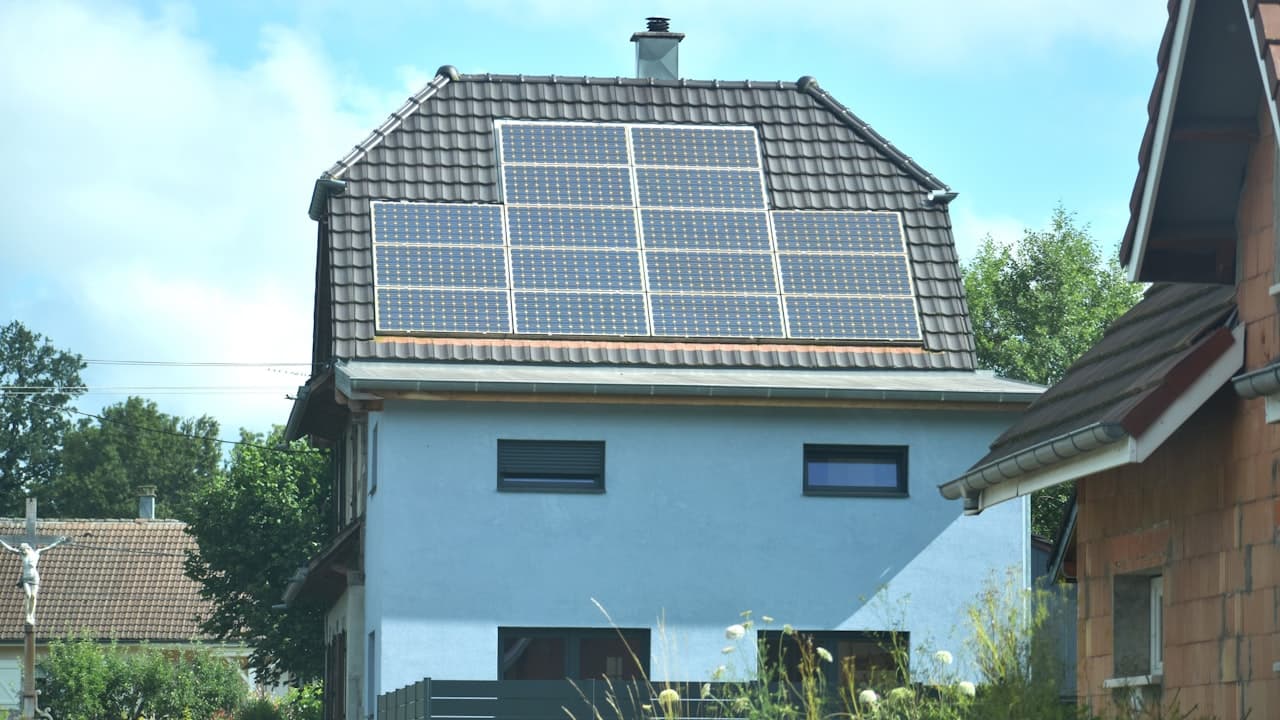
Your solar panels are losing power right now, and you might not even know it. A thin layer of dust that's barely visible from the ground can reduce output by 5-10%. Bird droppings, pollen, and the distinctive red soil film common in parts of Zimbabwe can push losses to 15-25%.
This is called soiling, and in Zimbabwe's climate it's one of the most significant — and most fixable — causes of underperformance.
What Soiling Does to Your Panels
Solar panels work by absorbing sunlight through their glass surface. Anything sitting on that glass — dust, dirt, bird droppings, leaves, pollen, soot — blocks light from reaching the solar cells underneath.
The effect is cumulative. On day one after cleaning, you might lose 0.5%. After a week, 2-3%. After a month in the dry season without rain, 8-15%. After three months near a dirt road in Matabeleland, you could be looking at 20-25% loss.
That's not just an efficiency number on a chart. On a 5 kW system producing 25 kWh per day, a 15% soiling loss means you're losing 3.75 kWh daily — about $0.45 worth of electricity at current tariff rates. Over a dry season (May to October), that adds up to over $80 in lost production from a problem that costs nothing but time to fix.
Where Soiling Is Worst in Zimbabwe
Not all parts of the country are equally affected. Geography, industry, and local conditions create significant regional variation.
| Location | Soiling Risk | Main Culprits |
|---|---|---|
| Bulawayo / Matabeleland | Very High | Dry conditions, mining dust, unpaved roads |
| Lowveld (Chiredzi, Beitbridge) | High | Dry conditions, agricultural dust, extreme heat baking dust onto glass |
| Midlands (Gweru, Kwekwe) | High | Mining areas, cement dust, industrial fallout |
| Harare / Mashonaland | Moderate | Seasonal — low in wet season, builds up in dry season |
| Victoria Falls / Zambezi | Moderate | Seasonal dust, some mist deposits near the falls |
| Eastern Highlands | Low to Moderate | More rainfall keeps panels cleaner, but pollen in spring |
The Red Soil Problem
Anyone who's lived in parts of Mashonaland, the Midlands, or near laterite soils knows the distinctive red dust that gets into everything. On solar panels, this fine iron-rich dust creates a film that rain doesn't fully wash off. Regular rain might clear loose dust, but the red film bonds to the glass surface and requires manual cleaning.
If your property has red soil, expect to clean your panels more frequently than the general guidelines suggest — even during the wet season.
Bird Droppings: More Than Cosmetic
A single bird dropping on a solar panel isn't just a spot of shade. Because panels are wired in series (one cell feeds into the next), a blocked cell reduces the output of the entire string. One dropping covering a single cell can reduce that string's output by 30-40%.
Worse, the blocked cell becomes a hot spot. While the other cells are generating electricity, the shaded cell absorbs energy as heat. Over time, repeated hot spots can permanently damage the cell, creating a brown discolouration that reduces output even after cleaning.
If you notice persistent brown or yellow marks on a panel cell after cleaning, that cell may have heat damage from bird droppings or other localised shading. The panel still works, but that cell's output is permanently reduced. This is why regular cleaning — before droppings bake on — matters.
Trees, Pollen, and Sap
Overhanging trees create a double problem: they shade the panels (reducing output directly) and they drop leaves, pollen, sap, and attract birds. If possible, trim any branches that overhang or come within 3-4 metres of your panels.
In spring (September-October), pollen from msasa trees and other indigenous species can coat panels with a sticky yellow film. This is worst in Mashonaland and the Eastern Highlands.
How Often to Clean
The right cleaning frequency depends on your location and the season.
| Season | Low-Soiling Areas | High-Soiling Areas |
|---|---|---|
| Wet season (Nov – Mar) | Every 6 – 8 weeks | Every 4 – 6 weeks |
| Dry season (Apr – Oct) | Every 3 – 4 weeks | Every 2 – 3 weeks |
| After a dust storm | Immediately | Immediately |
These are guidelines. The most reliable approach is to monitor your output and clean when you see a drop that isn't explained by weather. If yesterday was clear and sunny and you produced 22 kWh, and today is equally clear but you're only producing 19 kWh, soiling is the likely cause.
Use SolMate's forecast tool to compare your expected output against actual production. A growing gap between the forecast (which assumes clean panels) and your actual output is a reliable signal that it's time to clean.
How to Clean Solar Panels
Proper cleaning technique matters. Done wrong, you can scratch the anti-reflective coating, crack the glass, or void your warranty.
The Right Way
-
Clean early morning or late afternoon. Panels heat up significantly in direct sun — surface temperatures can exceed 60 degrees C by midday. Spraying cold water on hot glass can cause thermal shock and micro-cracking. Early morning (before 8 AM) or late afternoon (after 4 PM) are the safe windows.
-
Use plain water. Lukewarm or ambient temperature water is ideal. If your borehole water is very hard (high mineral content), consider collecting rainwater for panel cleaning — mineral deposits from hard water leave their own film.
-
Use a soft brush or sponge. A soft-bristled brush (like a car wash brush) or a non-abrasive sponge on a telescoping pole works well. Start at the top and work down, letting gravity carry the dirty water away.
-
Rinse thoroughly. After brushing, rinse with clean water to remove all loosened dirt. Don't leave soapy or dirty water to dry on the panel — it defeats the purpose.
-
Inspect while cleaning. This is your opportunity to check for cracked glass, discoloured cells, loose mounting clips, or damaged cable connections.
What NOT to Do
These mistakes are common and can cause real damage:
- Pressure washers. The high-pressure jet can crack the glass, damage the frame seals, and force water into the junction box. Never use a pressure washer on solar panels.
- Abrasive cleaners or scourers. Steel wool, abrasive sponges, and gritty cleaning powders scratch the anti-reflective coating. Once that coating is scratched, the panel permanently loses 2-3% efficiency.
- Dish soap or household detergents. These leave a residue that attracts more dust. They can also degrade the anti-reflective coating over time. Plain water is genuinely all you need for routine cleaning.
- Walking on panels. This should be obvious, but it happens. Solar panel glass is strong enough to handle hail but not designed for point loads. Stepping on a panel can crack cells internally even if the glass looks fine.
- Cleaning in the midday sun. Beyond the thermal shock risk, your panels are producing electricity. Working on wet, electrified surfaces at height adds unnecessary danger.
Some panel manufacturers explicitly state that using anything other than water and a soft cloth voids the product warranty. Check your panel's care instructions before using any cleaning solution, no matter how gentle it claims to be.
Tilt Angle and Self-Cleaning
Steeper tilt angles help panels stay cleaner. When it rains, water sheets off a steeply tilted panel, carrying loose dust with it. Flat or near-flat panels hold water in puddles that evaporate and leave mineral deposits.
| Tilt Angle | Self-Cleaning Ability |
|---|---|
| 0 – 10 degrees | Poor — water pools, dust accumulates quickly |
| 15 – 20 degrees | Moderate — some rain washing, still needs manual cleaning |
| 25 – 30 degrees | Good — rain effectively clears loose dust |
| 30+ degrees | Excellent self-cleaning, but may sacrifice some output at Zimbabwe's latitude |
For most Zimbabwe locations (latitude 17-22 degrees S), the optimal tilt for annual output is 20-25 degrees. If soiling is a major concern in your area, tilting to 25-30 degrees is a reasonable trade-off — you lose 1-2% from non-optimal angle but gain more than that back from reduced soiling.
Commercial Panel Cleaning Services
If your panels are on a high or steep roof, or you simply don't want to do it yourself, commercial cleaning services are available in most Zimbabwe cities. A typical residential clean costs $20-50 depending on the number of panels and roof access.
What to look for in a cleaning service:
- They use deionised or soft water (not borehole water with high mineral content)
- They use soft brushes or microfibre tools, not pressure washers
- They clean early morning or late afternoon
- They provide a brief inspection report noting any visible damage
- They don't use detergents or chemical cleaners
For a typical residential system, professional cleaning every 2-3 months during the dry season and once during the wet season is a good baseline.
Monitoring Output Changes
The best cleaning schedule is one based on actual output data rather than a fixed calendar. Here's a simple monitoring approach:
- Note your clean-panel baseline. After cleaning, record your output on the next clear day. This is your reference point.
- Compare weekly. On a similarly clear day the following week, check output. If it's dropped by more than 3-5% without a weather explanation, soiling is building up.
- Track the trend. Over a season, you'll learn your local soiling rate and can predict when cleaning is needed.
SolMate's forecast tool makes this comparison easy. The forecast shows expected output based on weather conditions. If your actual production consistently falls below the forecast, soiling is the most likely explanation.
PV Forecast
See today's solar output and the best times to run loads.
The Bottom Line
Panel soiling is the most common reason Zimbabwe solar systems underperform. It's also the easiest to fix. A monthly clean during the dry season and a watchful eye on your output data can recover 10-20% of lost production — energy you've already paid for with your panel investment but aren't collecting.
Keep it simple: plain water, soft brush, early morning. Your panels will thank you with higher output and a longer lifespan.